What Is Binance Exchange?
1. What Is Binance Exchange?
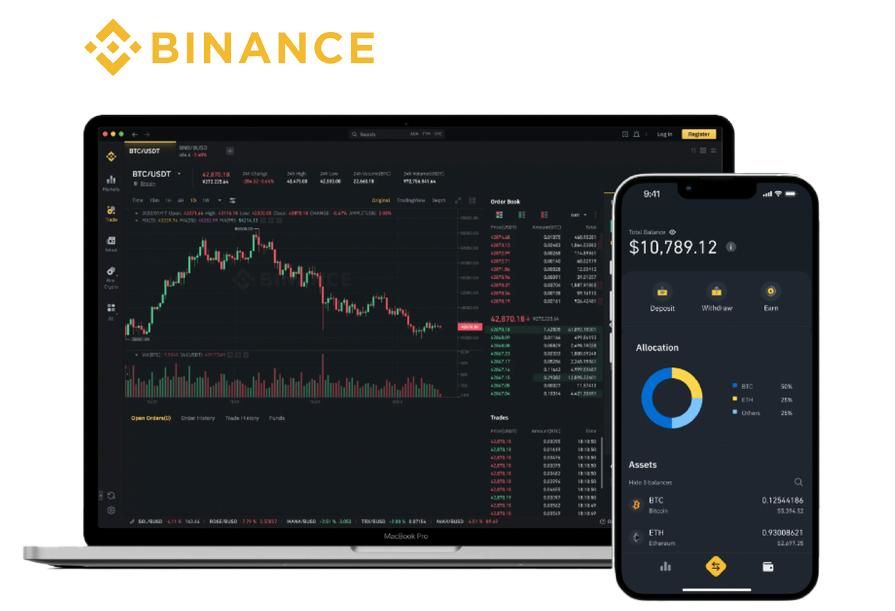
Binance is one of the world's largest cryptocurrency exchanges, providing a platform where users can buy, sell, trade, and manage digital assets such as Bitcoin (BTC), Ethereum (ETH), BNB, and thousands of other cryptocurrencies.
Founded in 2017, Binance has developed into a comprehensive cryptocurrency ecosystem. It offers services for both beginners and experienced traders, including spot trading, futures trading, margin trading, staking-related products, peer-to-peer (P2P) trading, and cryptocurrency wallets.
For users in Vietnam, Binance is particularly popular because of its extensive cryptocurrency selection, competitive trading fees, mobile application, and P2P marketplace.
Vietnamese users can access various crypto trading services and use supported payment methods to exchange Vietnamese dong (VND) for cryptocurrencies. However, payment availability and account restrictions depend on Binance's current policies and applicable Vietnamese regulations.
Key Binance Information
Item | Details |
|---|---|
Platform | Binance |
Industry | Cryptocurrency exchange |
Founded | 2017 |
Founder | Changpeng Zhao (CZ) |
Headquarters | No single publicly designated global headquarters |
Main website | binance.com |
Supported assets | BTC, ETH, BNB and many other cryptocurrencies |
Trading services | Spot, Futures, Margin, P2P |
Mobile application | Android and iOS |
Native token | BNB |
Main users | Global cryptocurrency traders |
Which Country Is Binance From?
Binance was founded in 2017 by Changpeng Zhao, commonly known as CZ.
Although Binance initially established its operations in China, it subsequently relocated its business activities amid regulatory developments. The company has operated through an international corporate structure involving different legal entities and jurisdictions.
It is important to understand that Binance is not simply a cryptocurrency exchange headquartered in one country.
Its global platform, Binance.com, serves users across different markets, subject to regional restrictions and local regulatory requirements.
For Vietnamese users, the most important consideration is not which country Binance comes from, but whether the platform is permitted to provide services under Vietnam's current regulatory framework.
When Was Binance Founded?
Binance was founded in July 2017.
Its initial coin offering (ICO) took place in July 2017, raising approximately $15 million through the sale of its BNB token.
The exchange quickly gained popularity due to its broad cryptocurrency selection, competitive fees, and trading infrastructure.
Over the following years, Binance expanded its services to include derivatives, P2P transactions, blockchain development, and other cryptocurrency-related products.
2. Is Binance Legal in Vietnam?
The legality of Binance in Vietnam requires careful consideration because Vietnam has introduced a new regulatory framework for digital assets.
Historically, Vietnam did not recognize cryptocurrencies as legal tender or an official means of payment. However, buying, holding, and trading cryptocurrencies were not generally subject to a blanket prohibition.
The regulatory situation has become more structured since 2025.
Vietnam's Cryptocurrency Regulations in 2026
Vietnam's Law on Digital Technology Industry No. 71/2025/QH15 took effect on January 1, 2026, establishing a legal framework for digital assets.
In addition, the government issued Resolution No. 05/2025/NQ-CP on September 9, 2025, introducing a pilot program for the cryptocurrency asset market.
The framework establishes requirements for organizations seeking permission to operate cryptocurrency trading markets in Vietnam.
In January 2026, the Ministry of Finance announced administrative procedures for licensing crypto-asset trading market operators.
The pilot framework requires applicants to satisfy substantial financial, ownership, technological, and operational requirements.
For example, the initial licensing requirements include a minimum contributed charter capital of VND 10,000 billion and restrictions on foreign ownership.
This represents a significant change in Vietnam's approach to cryptocurrency regulation.
Is Binance Licensed in Vietnam?
As of November 14, 2026, Binance should not be described as a Vietnam-licensed domestic cryptocurrency exchange.
Vietnam's pilot licensing system is designed around Vietnamese enterprises that meet local regulatory requirements.
Binance is an international platform, and using its global website does not automatically mean it has obtained authorization to operate as a licensed domestic exchange in Vietnam.
There is also an important transition rule.
Under Article 7 of Resolution 05/2025/NQ-CP, after six months from the date the first crypto-asset service provider receives its license, domestic investors trading through organizations that are not licensed by Vietnam may face administrative or criminal liability, depending on the nature and severity of the violation.
An October 2026 clarification from the Vietnamese Government also addressed the treatment of transactions on international exchanges after the licensing transition period.
Therefore, users should not assume that international platforms such as Binance will remain available for unrestricted domestic trading indefinitely.
What Should Vietnamese Binance Users Know?
Question | Situation in Vietnam |
|---|---|
Is cryptocurrency recognized as legal tender? | No |
Is cryptocurrency treated as an official means of payment? | No |
Is there a legal framework for digital assets? | Yes |
Are crypto exchanges subject to licensing? | Yes |
Is Binance a Vietnam-licensed domestic exchange? | No |
Can users assume unrestricted access to overseas exchanges? | No |
Are regulatory changes important? | Yes, particularly during the pilot transition |
Our conclusion: Binance is an internationally established cryptocurrency exchange, but its international reputation does not mean it has a domestic operating license in Vietnam. Vietnamese users should carefully monitor the licensing transition and avoid assuming that offshore trading is permanently unrestricted.
This section is general educational information, not individualized legal advice.
3. Binance Cryptocurrency Trading Fees
Trading fees are an important consideration when choosing a cryptocurrency exchange, especially for Vietnamese users who trade frequently or use automated trading strategies.
Binance uses a tiered fee structure. The actual fee depends on the trading product, account VIP level, trading volume, and applicable promotional discounts.
Binance Spot Trading Fees
For regular users, the standard spot trading fee is generally 0.1% for both maker and taker orders.
Users who pay trading fees with BNB may qualify for an additional discount, subject to the applicable fee rules.
Trading Level | Maker Fee | Taker Fee |
|---|---|---|
Regular User | 0.10% | 0.10% |
With eligible BNB discount | 0.075% | 0.075% |
VIP 1 | 0.09% | 0.10% |
VIP 2 | 0.08% | 0.10% |
VIP 3 | 0.04% | 0.06% |
The VIP examples are indicative standard fee levels, not a guarantee of the current fee for every trading pair. Certain fiat pairs and promotional products have different rates.
Example: How Much Does Binance Charge?
Suppose you purchase BTC worth 10,000 USDT using a regular spot trading account.
Item | Calculation | Fee |
|---|---|---|
Purchase value | 10,000 USDT | — |
Standard spot fee | 10,000 × 0.1% | 10 USDT |
Eligible BNB discount | 10,000 × 0.075% | 7.5 USDT |
If you later sell the BTC, another trading fee will apply.
Therefore, your total trading fees for buying and selling would be approximately 20 USDT without the discount or 15 USDT with the assumed BNB discount, excluding other costs.
Other Binance Fees
Service | Fee Structure |
|---|---|
Spot Trading | Usually 0.1% for regular users |
Futures Trading | Depends on maker/taker and VIP level |
Margin Trading | Trading fee plus borrowing interest |
P2P Trading | Depends on merchant, order type, and applicable market rules |
Crypto Deposits | Generally no Binance deposit fee; network costs may apply |
Crypto Withdrawals | Varies by cryptocurrency and blockchain network |
Fiat Transactions | Depends on payment method and currency |
For Vietnamese users, it is particularly important to distinguish between trading fees and the total cost of purchasing cryptocurrency.
For example, a P2P transaction may involve a price difference between merchants, payment processing costs, or other market-related expenses even if the displayed platform trading fee is zero.
Always check the fee displayed on Binance before confirming a transaction.
4. Is Binance a Reputable Platform? Advantages and Disadvantages
Binance is a well-known international cryptocurrency exchange with a large user base, extensive trading infrastructure, and a broad range of digital asset products.
However, a platform's popularity does not mean that trading on it is risk-free.
To evaluate Binance fairly, users should consider its trading services, liquidity, security measures, regulatory history, and operational risks.
Advantages of Binance
1. Extensive Cryptocurrency Selection
Binance supports a large selection of cryptocurrencies and trading pairs, allowing users to access established assets such as BTC and ETH as well as newer digital assets.
2. Competitive Trading Fees
Its standard spot trading fee is relatively competitive compared with many cryptocurrency exchanges. Additional discounts may be available through BNB or VIP trading levels.
3. High Liquidity
Binance is among the major global cryptocurrency trading platforms. Its leading trading pairs generally offer substantial liquidity, which can help reduce slippage when executing orders.
4. Multiple Trading Products
Binance offers various services, including:
Spot trading
Futures trading
Margin trading
P2P trading
Earn-related products
Web3 wallet services
Cryptocurrency conversion
Availability varies by region and account eligibility.
5. Multiple Security Features
Binance provides security tools such as two-factor authentication (2FA), withdrawal address whitelisting, anti-phishing codes, device management, and withdrawal security checks.
6. Beginner-Friendly Mobile Application
The Binance application offers simplified and advanced interfaces, helping beginners gradually learn how to use cryptocurrency trading services.
Disadvantages of Binance
1. Regulatory Uncertainty
Binance operates internationally, but regulatory permissions differ across countries. Its global availability does not guarantee that all services are legally available in every market.
For Vietnamese users, the new domestic licensing framework is a particularly important consideration.
2. Complicated Trading Features
Although Binance offers a simplified interface, beginners may find futures, margin, leveraged trading, and advanced order types difficult to understand.
3. Account Verification Requirements
Users may need to complete identity verification before accessing certain services, increasing withdrawal limits, or meeting regulatory requirements.
4. Account Restrictions
Binance may restrict certain account functions following security alerts, compliance reviews, suspicious transactions, or regulatory requirements.
5. Cryptocurrency Market Risks
Cryptocurrency prices can fluctuate significantly. Users may lose money even when trading on a reputable platform.
Binance Advantages vs Disadvantages
Advantages | Disadvantages |
|---|---|
Large cryptocurrency selection | Regulatory restrictions in some markets |
Competitive trading fees | Complicated advanced features |
High liquidity on major pairs | Account verification requirements |
Multiple trading services | Possible account restrictions |
Strong security tools | Not completely immune to cyberattacks |
Popular mobile application | Cryptocurrency market volatility |
How Do We Evaluate Binance?
Evaluation Category | Assessment |
|---|---|
Brand Recognition | Excellent |
Cryptocurrency Selection | Excellent |
Spot Trading Fees | Competitive |
Liquidity | Strong |
Mobile Application | Comprehensive |
Security Features | Extensive |
Regulatory Position in Vietnam | Significant restrictions and transition risks |
Beginner Experience | Good, but some features are complicated |
Overall, Binance is a major cryptocurrency exchange with a broad range of trading services. However, Vietnamese users should evaluate local regulatory developments separately from the platform's international reputation.
5. How Do We Evaluate Binance Founder Changpeng Zhao (CZ)?
Changpeng Zhao, commonly known as CZ, is the founder of Binance and one of the most influential figures in the cryptocurrency industry.
He played a major role in building Binance into a global cryptocurrency exchange after its launch in 2017.
Who Is Changpeng Zhao?
CZ was born in China and later moved to Canada with his family.
Before establishing Binance, he worked in technology and financial trading-related businesses, including cryptocurrency exchange development.
His experience in software development and trading infrastructure contributed to Binance's rapid expansion.
Why Is CZ Important to Binance?
CZ helped establish Binance's business model around:
A broad selection of cryptocurrency trading pairs.
Competitive trading fees.
Rapid product development.
International market expansion.
Development of the BNB ecosystem.
His leadership played a significant role in Binance's early growth.
However, CZ's career has also involved serious regulatory and legal controversies.
CZ's Legal Case in the United States
In November 2023, CZ pleaded guilty in the United States to failing to maintain an effective anti-money-laundering program at Binance under the Bank Secrecy Act.
He resigned as Binance CEO as part of the resolution.
Binance also pleaded guilty to federal charges and agreed to pay approximately $4.3 billion in penalties.
In April 2024, CZ was sentenced to four months in prison.
In October 2025, he received a presidential pardon from Donald Trump.
These events are important when evaluating Binance's corporate governance and regulatory history.
Our Assessment of CZ
Category | Assessment |
|---|---|
Business Experience | Extensive |
Contribution to Binance | Significant |
Cryptocurrency Industry Influence | Very High |
Regulatory Controversies | Significant |
Leadership Role | Former Binance CEO |
Current Position | Not Binance's CEO |
CZ's achievements in developing the cryptocurrency industry are substantial, but his legal history should not be overlooked.
Investors should evaluate Binance based on its current management, financial disclosures, security arrangements, and regulatory compliance rather than relying solely on its founder's reputation.
6. Information About Binance Hacking Incidents
Security is one of the most important considerations when selecting a cryptocurrency exchange.
Binance has experienced security incidents during its operating history. These incidents demonstrate that even large cryptocurrency exchanges are not completely immune to cyberattacks.
Here are several notable incidents.
Major Binance Security Incidents
Year | Incident | Reported Impact |
|---|---|---|
2019 | Binance hot wallet hack | Approximately 7,000 BTC stolen |
2022 | BNB Chain cross-chain bridge exploit | Approximately 2 million BNB involved in the exploit |
2026 | Reported hot wallet security incident | Binance reported approximately $6.3 billion in unauthorized withdrawals in October 2026 |
2019: Binance Hot Wallet Hack
In May 2019, Binance announced that hackers had stolen approximately 7,000 BTC from its hot wallet.
The attackers reportedly used multiple techniques, including phishing and malware, to obtain access to user account credentials and security information.
Binance temporarily suspended deposits and withdrawals while conducting security reviews.
The exchange stated that affected user funds would be covered through its Secure Asset Fund for Users (SAFU).
2022: BNB Chain Bridge Exploit
In October 2022, an attacker exploited a vulnerability in the BNB Chain cross-chain bridge.
Approximately 2 million BNB were involved in the incident, with the value at the time estimated at hundreds of millions of US dollars.
The incident affected the BNB Chain ecosystem rather than representing a conventional direct theft from Binance exchange user accounts.
October 2026: Reported Hot Wallet Incident
Binance published a security incident update on October 30, 2026, reporting unauthorized withdrawals from compromised hot wallets.
According to Binance's announcement, the incident occurred around October 29 and involved approximately $6.3 billion in token assets.
Binance stated that it would absorb the financial impact through SAFU and corporate treasury resources.
The exchange also reported temporarily suspending withdrawals while investigating the incident and implementing additional security measures.
The investigation was ongoing when the announcement was published. The reported amount and the technical explanation should therefore be understood as Binance's own preliminary disclosure rather than an independently established final audit result.
This incident is particularly important for users evaluating exchange custody risk.
Does Binance Refund Stolen Funds?
Binance has established the Secure Asset Fund for Users (SAFU), an emergency protection fund designed to provide an additional layer of protection in certain exceptional situations.
However, users should not assume that every loss will automatically be reimbursed.
SAFU is not equivalent to government-backed bank deposit insurance.
Losses caused by personal phishing attacks, fraudulent transfers, compromised devices, or other circumstances may be treated differently.
How to Protect Your Binance Account
Enable Google Authenticator or another supported 2FA method.
Activate an anti-phishing code.
Enable withdrawal address whitelisting.
Use a unique and strong password.
Avoid logging into Binance through unknown links.
Check your device login history regularly.
Keep large long-term cryptocurrency holdings in a secure self-custody wallet where appropriate.
For significant cryptocurrency holdings, it is generally safer not to keep all assets on a centralized exchange.
7. Things to Consider When Trading Cryptocurrency on Binance
Cryptocurrency trading involves financial risks, especially for beginners who are unfamiliar with market volatility, leverage, and blockchain transactions.
Vietnamese users should pay particular attention to the following issues.
1. Understand Vietnam's Regulatory Environment
Before using Binance, understand the latest Vietnamese regulations governing digital assets and overseas trading platforms.
Do not assume that the ability to register an account means every trading activity is legally permitted in Vietnam.
2. Be Careful with P2P Transactions
Binance P2P allows users to buy and sell cryptocurrencies directly with other users.
However, users should:
Only use payment accounts under their own names.
Avoid accepting payments from unrelated third parties.
Never release cryptocurrency before confirming payment.
Keep transaction records.
Avoid suspicious offers with unusually favorable exchange rates.
Vietnamese users should also be aware of potential bank account freezes or investigations involving suspicious payment sources.
3. Avoid Excessive Leverage
Futures and margin trading can amplify both profits and losses.
For beginners, spot trading is generally easier to understand than leveraged trading.
Never invest money you cannot afford to lose.
4. Check Withdrawal Networks Carefully
When transferring cryptocurrency, make sure the receiving address and blockchain network are correct.
For example, USDT may be available on networks such as TRC20, ERC20, and BEP20.
Selecting an unsupported network can result in permanent asset loss.
5. Protect Your Account and Personal Information
Never share your Binance password, verification codes, or private keys with other people.
Be cautious of individuals pretending to be Binance customer support representatives.
6. Understand Cryptocurrency Tax and Reporting Requirements
Vietnam's digital asset regulatory framework is evolving.
Users should retain records of deposits, withdrawals, trading transactions, and other relevant financial activities.
They should also monitor new tax and reporting requirements issued by Vietnamese authorities.
8. Frequently Asked Questions (FAQ)
1. Which Devices Can Binance Be Used On?
Binance supports several types of devices.
Device | Supported |
|---|---|
Windows PC | Yes |
macOS | Yes |
Linux | Browser access |
Android | Yes |
iPhone / iPad | Yes |
Web Browser | Yes |
Users can access Binance through its official website or download the mobile application from official application stores where available.
Always verify the publisher and official application information before downloading.
2. Is Binance a Scam?
No. Binance is an established international cryptocurrency exchange, not simply a fraudulent website designed to steal users' money.
However, this does not mean every service, advertisement, third-party trading group, or person claiming to represent Binance is legitimate.
Scammers frequently imitate Binance through fake websites, applications, social media accounts, and investment schemes.
Always use official access channels and independently verify suspicious communications.
3. What Transfer Methods Does Binance Support?
Binance supports several ways to deposit, withdraw, and transfer cryptocurrency.
Transfer Method | Description |
|---|---|
Blockchain Transfer | Transfer cryptocurrency between wallets using supported networks |
Binance Internal Transfer | Transfer assets between eligible Binance accounts |
P2P Trading | Buy or sell cryptocurrency with other users |
Bank Transfer | Available for supported currencies and regions |
Card Payment | Supported debit or credit cards, subject to regional availability |
Fiat Payment Services | Availability depends on the user's country and account |
For Vietnamese users, P2P trading has been a commonly used way to exchange VND for cryptocurrency.
However, payment methods and legal availability may change under Vietnam's new regulatory framework.
4. Is Binance Safe?
Binance provides multiple security features, including:
Two-factor authentication (2FA).
Anti-phishing codes.
Withdrawal address whitelisting.
Device and account activity management.
Risk monitoring systems.
SAFU emergency protection arrangements.
Nevertheless, no centralized cryptocurrency exchange can guarantee complete protection against hacking, technical failures, or regulatory restrictions.
Users should enable all available security features and avoid storing all their long-term assets on an exchange.
5. How Do Fake Binance Applications Steal Cryptocurrency?
Fake Binance applications are designed to imitate the official application and trick users into revealing sensitive information.
Common methods include:
Fake Login Pages: Scammers create websites that look like Binance login pages to collect passwords and verification codes.
Malicious Applications: Fake applications may contain malware that steals account information or monitors device activity.
Fake Customer Support: Criminals pretend to be Binance employees and ask users to disclose verification codes or transfer cryptocurrency.
Fake Investment Offers: Fraudsters promise guaranteed profits, VIP trading services, or exclusive investment opportunities.
Fake Wallet Connections: Some malicious websites ask users to connect their cryptocurrency wallets and approve harmful transactions.
To avoid these attacks:
Download applications only from official sources.
Check the developer or publisher information.
Never share your 2FA codes.
Never disclose your wallet recovery phrase or private key.
Verify website addresses before entering account information.
Never approve wallet transactions you do not understand.
Important: Binance will never need your wallet recovery phrase or private key to provide ordinary customer support.